
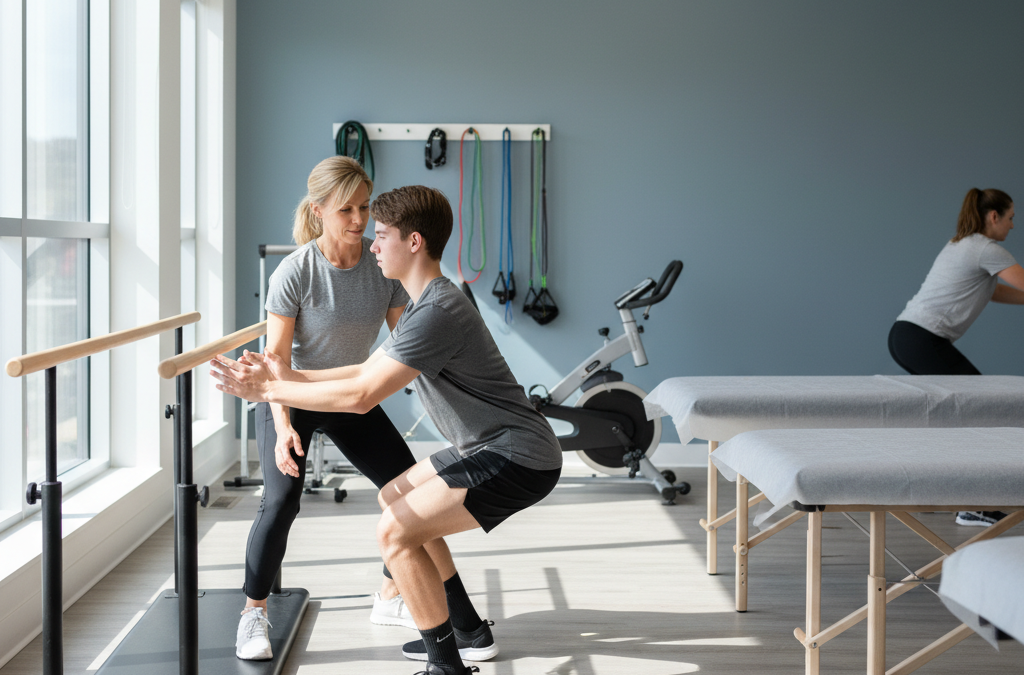
You got hurt chasing a personal best or mid-season hustle—and now you’re wondering what to do next. Here’s the good news: recovery doesn’t have to be guesswork. In this expert how-to guide, we’ll walk you through how to recover from sports injuries using an evidence-based game plan that matches how clinicians actually rebuild strength, mobility, and confidence. You’ll see where physiotherapy fits, when to add chiropractic care or massage therapy, and how advanced options like shockwave or laser can speed healing. Most important, you’ll know exactly when you’re ready to return to your sport—safely.
Overview
- Understand the phases of recovery—from pain control to full performance.
- Follow a step-by-step plan you can start today and refine with your clinician.
- See where services like physiotherapy, chiropractic care, massage therapy, pelvic floor physiotherapy, and custom orthotics fit.
- Get return-to-sport criteria that go beyond “feels OK.”
- Use prevention tactics that actually reduce reinjury risk.
At Whitby Physiotherapy & Sports Rehab, our integrated team in Whitby (198 Des Newman Blvd) has helped over 20,000 patients restore mobility and reduce pain with personalized plans. If you’re searching for how to recover from sports injuries, this guide shows what works—and why.
Quick Answer
To recover from sports injuries, start with load management, gentle mobility, and progressive strengthening guided by a licensed physiotherapist. In Whitby, you can access coordinated care at 198 Des Newman Blvd with physiotherapy, chiropractic, massage, acupuncture, and advanced rehab under one roof. For fast, safe progress, follow a step-by-step plan and objective return-to-sport testing.
Local Tips
- Tip 1: If you’re training near 198 Des Newman Blvd, plan sessions so you can drop in for same-day physiotherapy reassessment—helpful after a tweak at practice or at the gym.
- Tip 2: Spring and fall sports seasons in Whitby are busy. Book follow-ups in advance to hold your preferred times, and use direct insurer billing to simplify check-in.
- Tip 3: For field and court athletes, ask about on-field taping strategies and custom orthotics to reduce overuse stress during long practice weeks.
IMPORTANT: These tips align with our integrated services in Whitby, helping athletes coordinate care without visiting multiple clinics.
Before You Start (Prerequisites)
Set the stage for a smooth recovery. A little planning now saves weeks later.
- Confirm the injury type: Acute (sprain, strain, impact) vs. overuse (tendinopathy, stress reaction). The plan—and timeline—differs.
- Book an assessment: A licensed physiotherapist will test range of motion, strength, joint integrity, and functional tasks. At our Whitby clinic, we also screen for red flags (e.g., suspected fracture or concussion).
- Decide your support team:
- Physiotherapy for assessment, exercise prescription, manual therapy, and phased return-to-sport planning.
- Chiropractic care for spinal and joint mechanics to offload irritated tissues and improve movement quality.
- Massage therapy for soft-tissue recovery, circulation, and symptom relief around training loads.
- Acupuncture or Bioflex laser as adjuncts when pain and inflammation stall progress.
- Set realistic goals: Pain-free daily tasks → sport-specific skills → full match fitness. Write them down.
- Know your coverage: Our clinic supports direct billing to major insurers and assists WSIB/MVA claims—so admin doesn’t slow your rehab.
How to Recover from Sports Injuries: Step-by-Step Process
Use this phased plan to guide decisions. Your physiotherapist will personalize sets, reps, and progressions based on your sport, position, and test results.
Step 1: Settle Symptoms Without Stopping All Movement
- Why it matters: Total rest weakens tissue. Smart, pain-guided activity preserves circulation and healing capacity.
- What to do:
- Relative rest: Pause painful drills; maintain non-irritating cardio (bike, pool, brisk walk).
- Compression and elevation: For acute swelling, use a snug wrap and elevate after practices.
- Range of motion: Gentle, pain-limited mobility multiple times daily.
- Clinic examples:
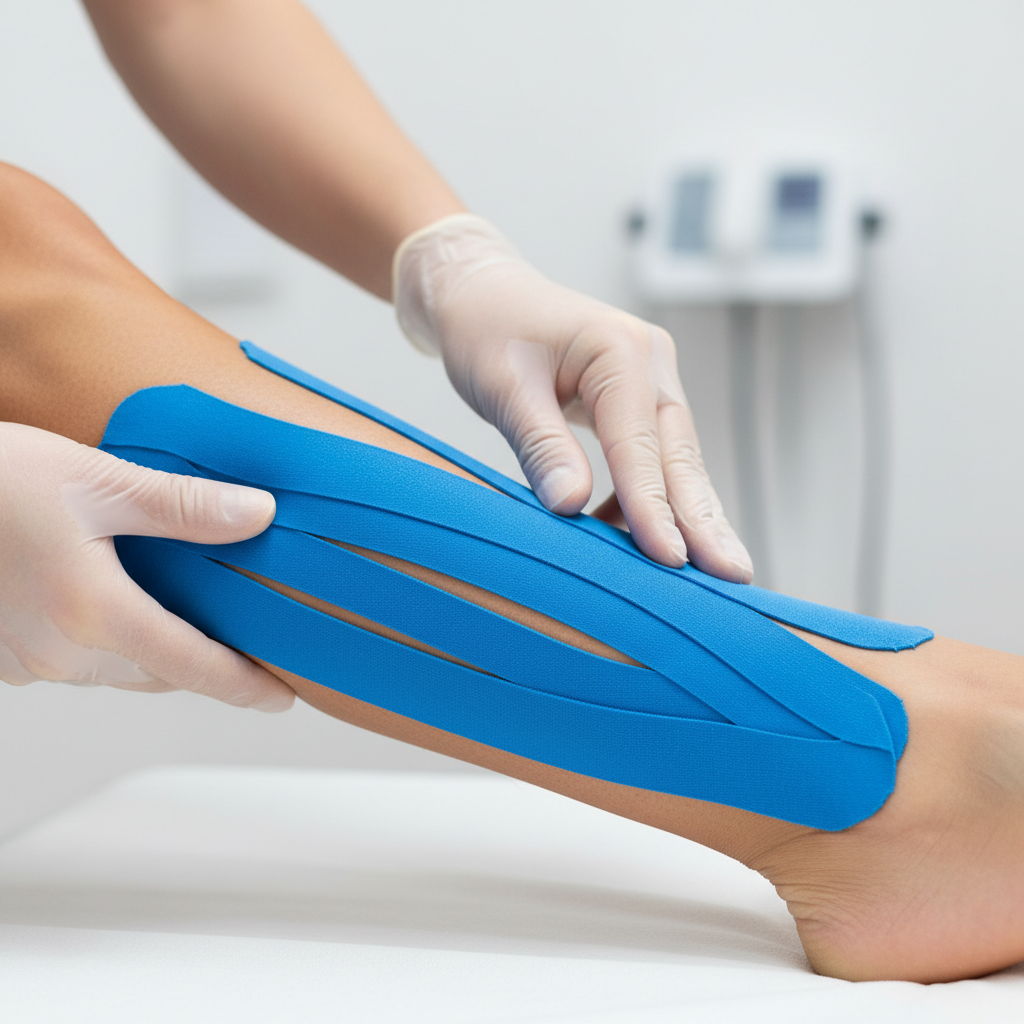
- Ankle sprain: joint mobilization, peroneal activation, taping for practice re-entry.
- Hamstring strain: isometrics to reduce pain, hip hinge patterning, soft-tissue work.
Step 2: Restore Mobility and Joint Mechanics
- Why it matters: Stiff joints and guarded movement change loading patterns and delay healing.
- What to do:
- Targeted mobility: Joint glides, foam rolling, and dynamic mobility matched to sport demands.
- Manual therapy: Soft-tissue and joint techniques to normalize mechanics when home drills aren’t enough.
- Movement retraining: Hip-hinge, squat pattern, and ankle dorsiflexion cues to reduce compensations.
- Clinic examples:
- Runner’s knee: patellofemoral tracking drills, hip external rotation strength, cadence tweaks.
- Shoulder impingement: thoracic mobility, scapular setting, rotator cuff endurance work.
Step 3: Build Tissue Capacity (Strength, Endurance, Tendon Load)
- Why it matters: Pain reduction without capacity gains invites reinjury the moment intensity spikes.
- What to do:
- Progressive strengthening: Isometric → isotonic → power. Respect soreness rules.
- Tendon loading: Slow, heavy resistance for tendinopathy; tempo work for control.
- Energy systems: Maintain sport-specific conditioning to protect late-game form.
- Clinic examples:
- Achilles pain: calf raise progressions, tibial rotation control, gradual plyometrics.
- Low back strain: anti-rotation core, hip hinge tolerance, stance endurance.
Step 4: Rebuild Speed, Agility, and Power
- Why it matters: Return-to-sport fails when athletes skip change-of-direction and deceleration training.
- What to do:
- Agility: Multi-directional drills, reaction tasks, and game-like patterns.
- Plyometrics: Landings before jumps, then single-leg progressions.
- Deceleration: Teach braking patterns to spare joints and tendons.
- Clinic examples:
- Basketball ankle sprain: lateral hops to cutting patterns with sport tape support.
- Soccer hamstring: sprint mechanics, fly-in accelerations, and hamstring power intervals.

Step 5: Objective Return-to-Sport Testing
- Why it matters: “No pain” isn’t enough. Objective tests reduce the chance of rushing back too soon.
- What to include:
- Strength symmetry: 90–100% vs. the other side (or pre-injury baseline).
- Functional tests: Hop tests, Y-balance, change-of-direction timing, and sport-specific skills.
- Workload ramp: Measured practice minutes, sprint counts, jump volume, and contact exposure.
- Clinic example: Our sports injury rehabilitation program pairs on-field drills with clinic-based metrics so your green light is earned—not guessed.
Troubleshooting: When Recovery Stalls
If progress plateaus for 10–14 days, investigate and adjust—don’t just push harder.
- Overload vs. underload: Soreness and fatigue may signal too much, too fast—or not enough stimulus to adapt. Tweak volume before intensity.
- Hidden mobility restriction: A stubborn hip or ankle can keep provoking the same tissue. Manual therapy plus targeted mobility often unlocks progress.
- Pain generators nearby: For knee pain, check hip strength and ankle dorsiflexion; for shoulder pain, check thoracic mobility and scapular control.
- Adjunct therapies:
- Shockwave therapy can jump-start tendon healing in chronic cases.
- Acupuncture may help with pain modulation to enable harder training.
- Bioflex laser can be integrated when inflammation keeps flaring.
- Concussion or vestibular symptoms: Dizziness, headache, or motion intolerance requires a specific plan. Our concussion physiotherapy care streamlines vision, balance, and exertion progressions.
- Technique errors: Video your movement. Coaching small changes in foot strike, trunk angle, or arm swing can offload pain triggers.
Comparison Table: Acute vs. Overuse Injuries
| Injury Type | Early Priorities | Key Progressions | Return-to-Sport Gate |
|---|---|---|---|
| Acute sprain/strain | Relative rest, compression, protected mobility | Strength symmetry, power, deceleration | Swelling resolved, pain ≤2/10 under practice load |
| Overuse (e.g., tendinopathy) | Load audit, isometrics, technique review | Heavy slow resistance, tempo control, gradual plyometrics | No flare-ups for 7–10 days at game-level volume |
Advanced Tips (Optional but Powerful)
These accelerate gains when used at the right time.
- Use P.E.A.C.E. & L.O.V.E. over old-school R.I.C.E.: Protect, Elevate, Avoid anti-inflammatories early, Compression, Educate → Load, Optimism, Vascularization, Exercise. It’s more aligned with tissue healing.
- Foot mechanics matter: Custom orthotics can reduce recurrent shin splints, plantar fasciitis, and medial knee stress in high-mileage athletes.
- Pelvic floor for runners and lifters: If you notice hip pinching, chronic low back tightness, or leakage on max effort, a pelvic floor physiotherapy screen can fix the missing link.
- Periodize strength: Treat rehab like training—block phases for hypertrophy, max strength, and power so changes stick.
- Micro-dose mobility: 3–5 minutes of joint prep before every practice beats one long weekly session.
- Balance and vestibular tuning: If you’ve had a head impact, layer in balance and gaze stabilization alongside conditioning. Our Whitby concussion & vestibular guide breaks down progressions.
Free Check-In: Is Your Plan On Track?
- Not sure if you’re ready to run, cut, or serve again?
- Bring your current program to our Whitby team for a quick progress audit.
- We’ll test key markers, tune loads, and map your next two weeks.
When you need head-to-head help, our integrated team coordinates physiotherapy, chiropractic care, massage therapy, acupuncture, shockwave therapy, pelvic floor care, and more—under one roof for faster decisions.
Process Table: R.I.C.E. vs. P.E.A.C.E. & L.O.V.E.
| Approach | Early Focus | Drawbacks/Benefits | Best Use |
|---|---|---|---|
| R.I.C.E. (Rest, Ice, Compression, Elevation) | Pain relief and swelling control | May overemphasize rest; misses education and loading principles | Very acute swelling; brief symptom relief |
| P.E.A.C.E. & L.O.V.E. | Protection, compression, education → progressive loading and exercise | Better alignment with tissue healing and long-term outcomes | Most musculoskeletal sports injuries |
Sport-Specific Examples (14 Scenarios)
- Soccer hamstring strain: Isometrics day 1–3, tempo eccentrics week 1–2, sprint mechanics and fly-ins week 2–4.
- Basketball ankle sprain: Peroneal activation, balance ladder, lateral decel drills, game tape support weeks 1–3.
- Runner’s knee (PFPS): Hip ER strengthening, cadence to ~170–180, incline progressions.
- Achilles tendinopathy: Heavy slow calf raises, isometrics for pain, pace control before plyos.
- Rotator cuff overload (tennis): Scapular setting, cuff endurance circuits, service-load tracking.
- Golfer’s elbow: Eccentric wrist flexors, grip endurance, swing path video for offloading.
- Shin splints: Foot strength, stride audit, possible custom orthotics, surface changes.
- Plantar fasciitis: Heel raises, toe yoga, load deload cycles, morning ramp protocol.
- IT band pain (cyclists/runners): Hip abductor work, saddle/stance review, downhill pacing.
- Low back strain (lifting): Hinge patterning, anti-rotation core, volume periodization.
- Shoulder impingement (swimmers): Thoracic mobility, scapular control, pull volume caps.
- Hip flexor strain (hockey): Lunge range restoration, adductor balance, crossover decel.
- Concussion with dizziness: Vestibular/oculomotor drills, exertion ladder, head movement pacing.
- Stress reaction (bone): Cross-train cardio, load substitution, progressive impact reintroduction.
Troubleshooting Concussion and Dizziness
Head injuries change the rules. Don’t guess—test and progress with a plan.
- Symptoms to flag: Headache, fogginess, light/noise sensitivity, dizziness, or visual strain during exercise.
- Assessment flow: Vision tracking, balance systems, vestibular-ocular reflex, and exertion tolerance.
- Progressions: Gaze stabilization, head-turn walking, sport-specific exertion stages, cognitive load reintroduction.
- Where to start: Our Whitby team built a dedicated pathway—see our concise post-concussion and vestibular guide and clinical concussion physiotherapy page.
Mid-Article CTA: Book Your Sports Rehab Plan
Ready for a clear path back to your sport?
- Assessment-led plan tailored to your position, season, and schedule.
- One clinic, many services: physiotherapy, chiropractic, massage therapy, acupuncture, shockwave, vestibular/concussion, pelvic floor.
- Direct insurer billing and support for WSIB/MVA.
Visit us in Whitby at 198 Des Newman Blvd and keep your comeback moving.
Frequently Asked Questions
How fast should I return to running or sport drills?
Use a staged build: pain-free walking and daily tasks → low-impact cardio → controlled drills → full training. Progress only when symptoms stay quiet for 24–48 hours after each new step. Your physiotherapist will set thresholds for pace, minutes, and intensity so you don’t jump too far too fast.
What’s the best way to manage swelling without losing strength?
Combine compression and elevation with short bouts of pain-free activation. Isometrics (e.g., gentle quad sets, calf holds) preserve strength while promoting fluid movement. Avoid long periods of total rest. Your therapist can show safe ranges and timelines for your specific injury.
Do I need imaging before starting rehab?
Not always. Many soft-tissue injuries respond to clinical assessment and conservative care. If your clinician suspects fracture, significant ligament tear, or persistent red flags, they’ll coordinate imaging with your physician. Starting guided rehab early—with safety checks—is often more helpful than waiting.
Where do shockwave or laser fit into recovery?
These modalities support healing when pain or chronic tissue changes limit exercise progress. Shockwave is often used for persistent tendinopathies; low-level laser can help modulate inflammation. They’re adjuncts—always paired with a progressive loading plan, not stand-alone fixes.
How do I know I’m really ready for game day?
Objective tests remove guesswork: strength symmetry, hop or change-of-direction metrics, and sport tasks under fatigue. If you can complete a simulated practice with stable symptoms for a week, you’re close. Your therapist will check boxes specific to your sport before full clearance.
Additional Resources
- Ask our team for a printable daily mobility checklist tailored to your injury.
- Request our return-to-running and return-to-lifting progression templates.
- Get a taping and bracing guide for common ankle, knee, and shoulder issues.
- Book a brief consult to review shoe wear patterns and orthotic options.
Key Takeaways
- Recovery is phased: manage symptoms, restore mechanics, build capacity, then add speed and skill.
- Objective testing beats guesswork and reduces reinjury risk.
- Integrated care—physio, chiro, massage, acupuncture, shockwave—removes bottlenecks.
- Local help at 198 Des Newman Blvd means faster course-corrections during the season.
Conclusion
Here’s the thing: athletes recover fastest when the plan matches the sport, the season, and the person. That means starting with pain-informed activity—not bedrest—then stacking mobility, strength, power, and skills with objective checkpoints. It also means solving roadblocks early, whether that’s a sticky ankle, a tendon that needs smarter loading, or a balance system that never bounced back after a head knock.
At Whitby Physiotherapy & Sports Rehab, we’ve built a one-roof model so your care moves as quickly as you do: physiotherapy, chiropractic care, massage therapy, vestibular and concussion care, pelvic floor physiotherapy, custom orthotics, acupuncture, shockwave therapy, and Bioflex laser—all coordinated at 198 Des Newman Blvd. When you need to get back to your teammates with confidence, we’re ready to build the plan and measure every step.
Next steps:
- Book an assessment to confirm your injury profile and goals.
- Start the step-by-step plan above with clear weekly targets.
- Use our testing gates to earn your return-to-sport—then protect it.