
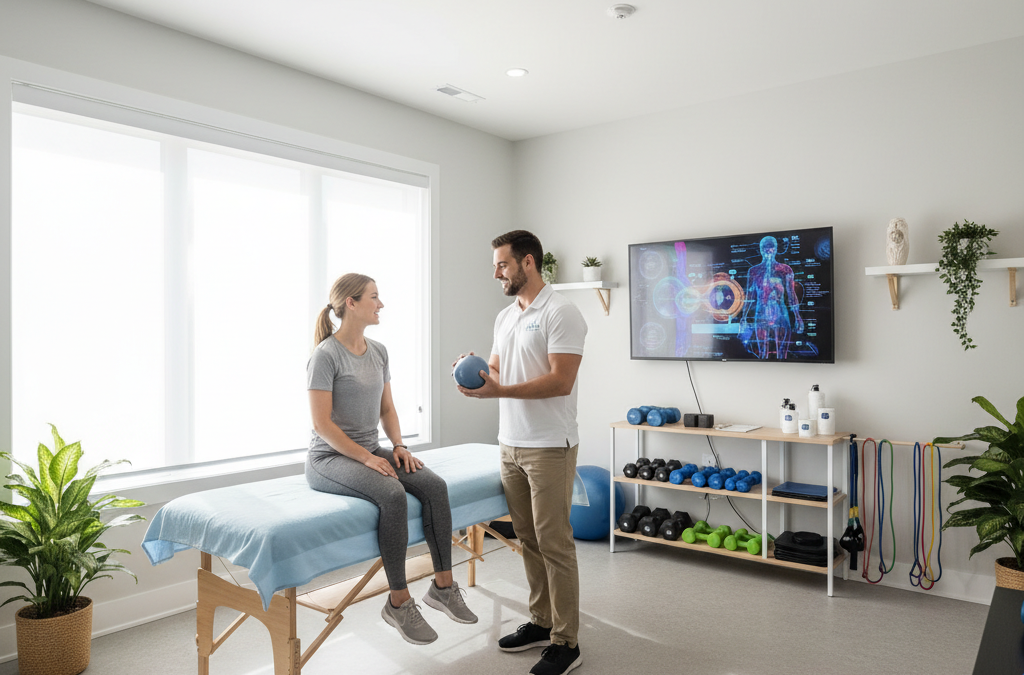
Pelvic floor dysfunction treatment options include targeted pelvic floor physiotherapy, behavior strategies like bladder training, manual therapy, biofeedback, and progressive exercise. For persistent pain or complex cases, clinics may integrate acupuncture or shockwave therapy and coordinate with medical providers. A personalized plan, reassessment, and home exercises deliver the best outcomes.
Quick Answer
Pelvic floor dysfunction treatment options center on pelvic floor physiotherapy with progressive exercise, manual therapy, and biofeedback. At Whitby Physiotherapy & Sports Rehab (198 Des Newman Blvd in Whitby), our licensed therapists pair evidence-based rehab with behavior coaching, and when appropriate, adjuncts like acupuncture or shockwave therapy—always within a customized plan.
Overview
Choose treatment by matching your symptoms to proven options: pelvic floor muscle training, breath mechanics, manual therapy, and behavior strategies first; add adjunct modalities for pain modulation; refer medically when red flags appear. A structured, individualized plan with regular progress checks delivers faster, safer results.
- What you’ll learn:
- How the pelvic floor works and why symptoms show up in hips, back, and bladder.
- Evidence-backed options from exercise to biofeedback, acupuncture, and more.
- When to escalate care or request medical investigations.
- Why this guide matters:
- Up to one in three adults experience pelvic floor symptoms over their lifetime; many never seek targeted rehab.
- Research supports supervised pelvic floor muscle training as a first-line strategy for incontinence and pelvic pain.
- Coordinated, multi-disciplinary care speeds recovery and reduces recurrence.
- Who it’s for:
- People in Whitby and Durham Region with leaking, urgency, pelvic pain, postpartum changes, or chronic hip/back issues.
- Athletes and active adults who notice symptoms during lifting, running, or impact sports.
- Patients who prefer non-surgical, drug-free options with direct insurance billing.
We’ll connect each option to real services at Whitby Physiotherapy & Sports Rehab so you can act with confidence.
What Is Pelvic Floor Dysfunction?
Pelvic floor dysfunction is impaired coordination, strength, or relaxation of the muscles and connective tissues that support the bladder, bowel, and reproductive organs. It can cause urinary or fecal leakage, urgency, pelvic pain, and hip or back discomfort. Accurate assessment guides targeted rehab focused on muscle control and symptom triggers.
- Common presentations:
- Stress urinary incontinence (leaks with cough, sneeze, jump) and urgency/frequency.
- Pelvic pain, dyspareunia, tailbone pain, and chronic hip or lumbar discomfort.
- Postpartum weakness or scar-related tension after delivery or pelvic surgery.
- Why this matters:
- Untreated dysfunction alters breathing, posture, and load transfer between the trunk and hips.
- Symptoms often limit activity; many reduce exercise, which can worsen control and confidence.
- Evidence shows supervised pelvic floor training can reduce leaks within 8–12 weeks in many adults.
- At our clinic (local relevance):
- Licensed pelvic health physiotherapists offer detailed assessments (breath, pressure management, muscle tone).
- Integrated care under one roof simplifies plans and scheduling.
- Direct billing helps patients start sooner and stay consistent.
For a deeper dive into assessment and therapy, see our dedicated page on pelvic floor physiotherapy in Whitby.
Why Pelvic Floor Dysfunction Matters
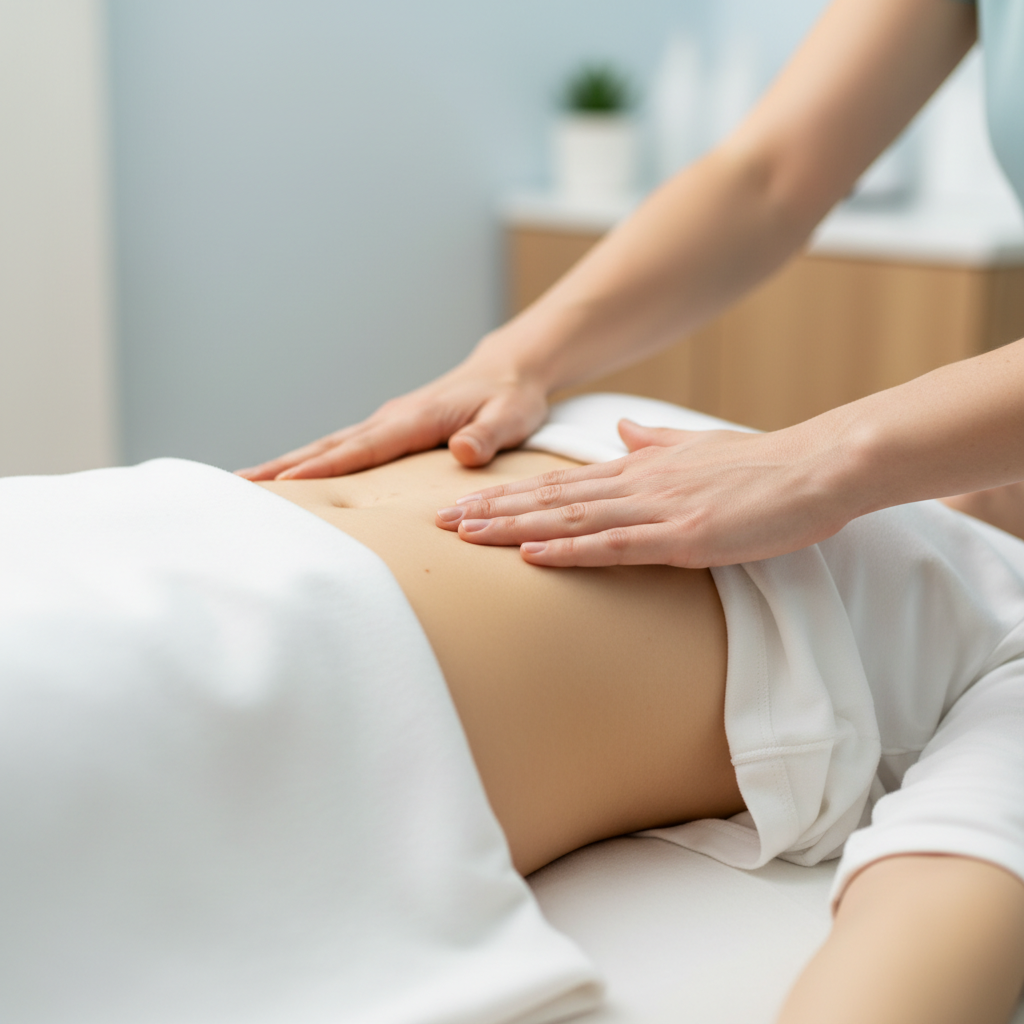
It affects continence, sexual health, and daily movement. Left unaddressed, people often limit activity, adopt poor movement strategies, and experience recurrent back or hip pain. Early, targeted rehab improves confidence, reduces symptom episodes, and supports safe returns to work, sport, and family life.
- Life impact (quick facts):
- Urinary leakage commonly leads to reduced physical activity participation and social withdrawal.
- Pelvic pain is associated with altered breathing mechanics and core endurance.
- Postpartum changes can persist for years without focused rehab, even in active adults.
- Performance and injury ripple effects:
- Suboptimal pressure management increases spinal and hip load during squats, deadlifts, and running.
- Compensations (glute gripping, breath-holding) may worsen symptoms under fatigue.
- Targeted retraining restores automatic control so lifts and impact feel predictable again.
- Community context (Whitby & Durham Region):
- Active residents and parents often juggle work, commute, and sport—time-efficient, integrated care helps them stay consistent.
- Our clinic provides coordinated services (physio, massage, chiropractic, acupuncture) to simplify care plans.
- We support MVA and WSIB patients whose pelvic symptoms can be missed after injury.
Local Tips
- Tip 1: If you’re visiting 198 Des Newman Blvd for a morning appointment, plan a few extra minutes for traffic near Brock Street and Highway 401 ramps so you’re relaxed before breath and pelvic floor tests.
- Tip 2: Winter in Whitby can affect pelvic bracing—bring shoes with good traction to avoid slips that trigger symptom flares.
- Tip 3: For postpartum visits, consider mid-day slots when the clinic is quieter; it makes guided breathwork and biofeedback sessions smoother.
IMPORTANT: These tips reflect our local flow at 198 Des Newman Blvd and help you get the most from pelvic floor physiotherapy.
How Pelvic Floor Rehabilitation Works
Rehab restores coordinated pressure, timing, and strength. Clinicians assess breath mechanics, muscle tone, and habits, then prescribe progressive pelvic floor muscle training, hip-core integration, and behavior strategies. Regular reassessment fine-tunes load and complexity so control becomes automatic during daily tasks and sport.
Assessment Building Blocks
- History and goals: Leaks, urgency patterns, pain triggers, activity demands, and postpartum or surgical history.
- Breathing and pressure: Diaphragm-pelvic floor synergy during quiet breathing, exertion, and lifts.
- Motor control: Timing/relaxation, endurance holds, quick flicks, and response to cueing.
- Regional links: Hip rotation strength, thoracic mobility, and lumbar load tolerance.
- Decision points: Identify overactivity vs underactivity to guide relaxation vs strengthening first.
Core Treatment Ingredients
- Pelvic floor muscle training (PFMT): Endurance, power, and speed sets with tailored cues (often 8–12 weeks supervised).
- Breath and pressure strategies: Exhale on effort, rib mobility, and brace-to-breathe transitions.
- Manual therapy: Soft-tissue and joint techniques for pelvic, hip, and lumbar contributions.
- Biofeedback: External cueing to improve awareness and timing; helps reduce over-bracing.
- Behavior changes: Bladder training, urge suppression, bowel mechanics, and hydration habits.
Progression and Return to Activity
- Graded loading: From supine control to upright, then dynamic patterns (squats, step-downs, impact).
- Sport-specific drills: Hop-and-hold, tempo running, lift clusters with breath pacing.
- Objective markers: Fewer pad changes, longer intervals between voids, reduced pain episodes, stronger holds.
- Relapse prevention: Keep one or two “anchor” exercises and refresh technique quarterly.
Our team often integrates general physiotherapy principles to reinforce hip and spine mechanics alongside pelvic retraining.
Types of Pelvic Floor Dysfunction Treatment Options
Start with conservative care: supervised PFMT, breath mechanics, manual therapy, and behavior coaching. Add adjuncts like acupuncture or shockwave therapy for stubborn pain. Consider medical referral for infections, bleeding, neurological signs, or non-resolving red flags. Personalize the blend based on presentation and goals.
Conservative, Evidence-Guided Core
- Supervised PFMT: Tailored endurance and power work; supervised programs outperform unsupervised routines in adherence and outcomes.
- Breathing drills: Diaphragm-pelvic coordination reduces bearing down and improves continence under load.
- Manual therapy: Helps down-train overactivity, relieve trigger points, and restore joint mobility in hips and lumbar spine.
- Behavior change: Bladder training, urge suppression, bowel positioning, fiber/hydration review.
- Biofeedback: Reinforces timing and relaxation for both overactive and underactive presentations.
Adjunct Modalities (Clinic-Integrated)
- Acupuncture: Used for pain modulation and to complement relaxation strategies.
- Shockwave therapy: Considered in select pelvic pain presentations related to myofascial restrictions or tendinopathies near the pelvis.
- Massage therapy: Addresses global muscle tone, stress, and recovery—useful when the whole system feels “on.”
- Chiropractic and osteopathy: Regional mechanics for spine and pelvis to support movement efficiency.
- Bioflex laser (when indicated): Low-level laser for localized tissue irritation as part of a larger plan.
Medical Collaboration and Referral
- When to co-manage: Recurrent UTIs, abnormal bleeding, neurological changes, fever, new bowel/bladder loss, or suspected endometriosis.
- Medication review: Some agents influence urgency/frequency or fluid balance; coordinate with the prescriber.
- Imaging and diagnostics: Consider when red flags persist or conservative care stalls.
Explore how pelvic floor care ties into broader function in our note on pelvic floor drivers of chronic hip pain.
Best Practices for Faster Progress
Anchor your plan to consistent practice, progressive loading, and objective tracking. Emphasize breath mechanics, quality reps, and symptom journal notes. Reassess every 2–4 weeks to adjust volume and complexity. Combine clinic sessions with short, frequent home sets for better carryover.
Daily Habits That Matter
- Micro-sessions: 2–3 short sets spaced through the day out-perform one long workout for motor learning.
- Breath first: Sync exhale with effort during lifts, rises from chairs, and stair climbs.
- Hydration/voiding: Balanced intake; avoid “just-in-case” trips that train the bladder to demand sooner.
- Sleep and stress: High stress ups muscle tone; use 90-second down-regulation breaths before bed.
Training Quality and Progression
- Form beats volume: Stop a set when breath or posture breaks—quality rewires patterns faster.
- Progressive overload: Add reps, holds, or position challenge weekly if symptoms remain stable.
- Contextual exposure: Practice in the positions that trigger symptoms (jogs, jumps, or front-rack squats) once baseline control returns.
Track What Works
- Simple metrics: Pad changes per day, average void interval, pain episodes per week, and longest hold time.
- Trigger diary: Note food, drink, and activity context when urgency spikes.
- Reassess: Every 2–4 weeks, adjust drills based on trends—not single days.
Tools and Resources You Can Use
Use simple, repeatable tools: bladder diary, urge-suppression steps, breath cadence cues, and weekly progress checks. In-clinic, pair cueing with manual therapy or biofeedback to accelerate learning. Keep a one-page checklist on the fridge to boost adherence.
Bladder Diary Template (Copy and Use)
Date | Time | Intake (oz) | Void (Y/N) | Leak (Y/N) | Urge (0-10) | Notes
---- | ---- | ------------ | ---------- | ---------- | ----------- | -----
Urge-Suppression Mini-Protocol
- Stop and stand tall; relax shoulders and jaw.
- Take 3–5 slow exhales; gently lift pelvic floor on the exhale.
- Perform 5 quick pelvic floor “flicks” to reset urgency.
- Wait until the urge drops; then walk calmly to the restroom.
Breath Cadence Cues
- Exertion rule: “Exhale on effort” for lifts, rises, and coughs.
- Recovery rule: 4-second inhale, 6-second exhale for 2 minutes after workouts.
- Relaxation rule: Hands on ribs; feel expand-out on inhale, soften-down on exhale.
Comparison: Options at a Glance
Most people start with supervised pelvic floor training plus behavior strategies. Add manual therapy and biofeedback to refine control. Consider acupuncture or shockwave for persistent pain. Seek medical input if red flags or limited progress remain after an adequate trial of conservative care.
| Option | Best for | What it involves | Evidence snapshot | Clinic services to ask about |
|---|---|---|---|---|
| Supervised PFMT | Leaks, urgency, postpartum weakness | Endurance/power sets, cues, weekly progressions | First-line in guidelines; strong outcomes in 8–12 weeks | Pelvic Floor Physiotherapy |
| Breath & behavior | Bearing down, urgency/frequency | Exhale-on-effort, bladder training | Improves symptom control and confidence | Pelvic Floor Physiotherapy |
| Manual therapy | Overactivity, pelvic/hip pain | Soft-tissue, joint techniques, mobility | Routinely used to modulate tone and pain | Physiotherapy, Massage, Chiropractic |
| Biofeedback | Timing/relaxation, awareness | External cueing for motor learning | Supports adherence and form | Pelvic Floor Physiotherapy |
| Acupuncture | Persistent pain, tension | Needle-based modulation | Useful adjunct for pain relief | Acupuncture service |
| Shockwave | Myofascial/tendon pain near pelvis | Focused acoustic pulses | Adjunct in select cases | Shockwave Therapy |
Case Examples from Our Whitby Clinic
Real-world plans blend assessment-led exercise, breath work, and behavior coaching. Small shifts—like exhaling on effort and trading long sets for micro-sessions—often unlock faster progress. Here are anonymized scenarios that mirror what we see daily in Whitby.
Postpartum Runner with Stress Incontinence
- Presentation: Leaks when jogging and during box jumps; 7 months postpartum.
- Plan: PFMT with breath cues, step-down drills, hop-and-hold progression, urge-suppression routine.
- Result trend: Fewer leaks by week 4; returned to interval runs by week 10 with stable control.
Office Professional with Pelvic Pain and Hip Tension
- Presentation: Achy groin/hip after long sitting; increased tone and breath-holding under stress.
- Plan: Manual therapy, rib mobility, down-regulation breaths, glute/hip strength in split-stance patterns.
- Result trend: Pain episodes decreased; sitting tolerance improved to full workday by month 2.
Recreational Lifter with Urgency
- Presentation: Urge spikes during heavy front-rack squats; frequent “just-in-case” voiding.
- Plan: Exhale-on-effort, set/rep changes to reduce valsalva, bladder training, quick-flicks between sets.
- Result trend: Longer intervals between voids; resumed prior loads with calmer pressure strategy.
Some pelvic symptoms overlap with balance and vestibular issues after injuries; our vestibular physiotherapy and concussion physiotherapy teams co-manage those cases when needed.
Free Consultation-Style Assessment
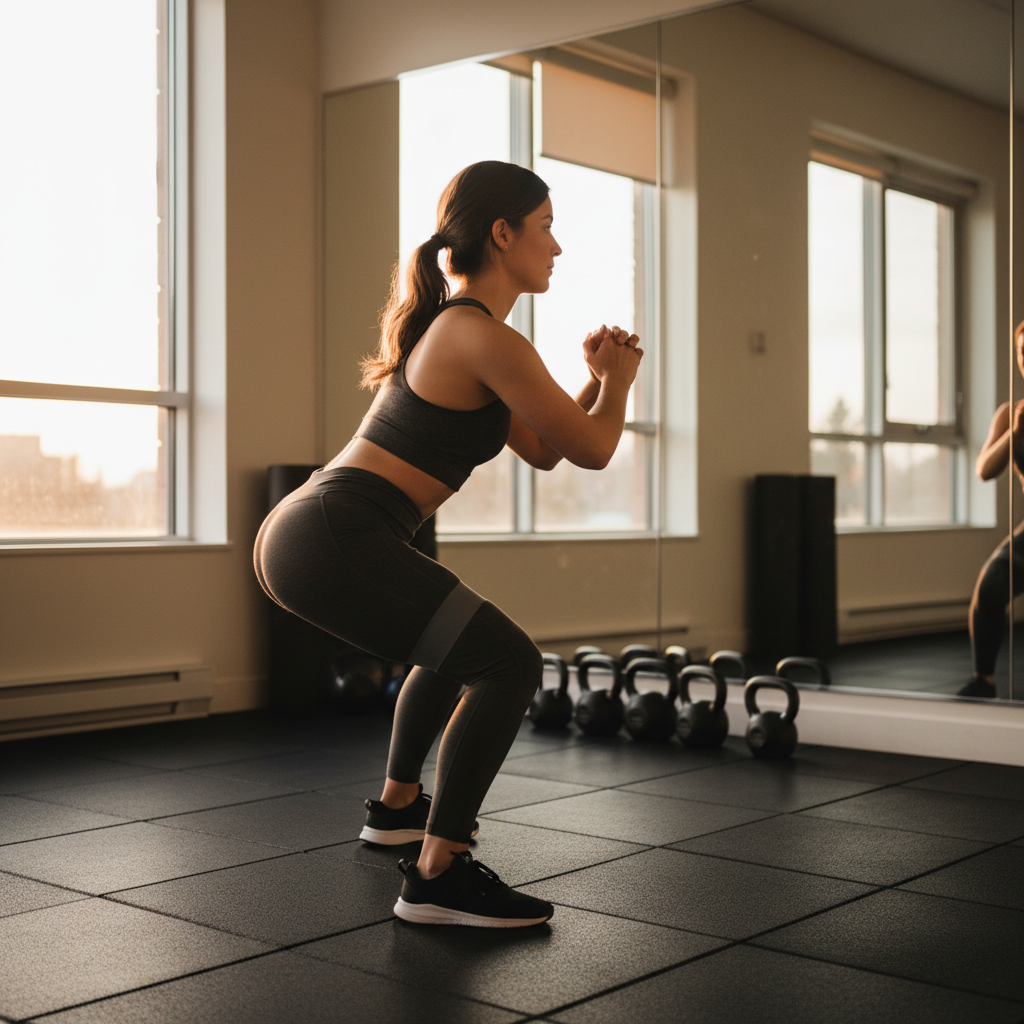
Not sure where to start? Book a pelvic health assessment at our Whitby clinic. We’ll map symptoms to a phased plan and coordinate any adjunct care under one roof.
Step-by-Step: Your First 4 Weeks
Build momentum with short, frequent practice. Pair breath and pelvic floor control, add gentle strength, and adopt urge-suppression strategies. Track pads, intervals, and hold times. Reassess at week 2 and week 4 to refine volume and cues.
Week 1: Reset and Awareness
- Baseline diary for leaks, urge level, void intervals, and triggers.
- Daily breath drills: 2 minutes morning and night.
- PFMT: 3 micro-sessions (light holds + quick flicks), focus on quality.
- Behavior: Stop “just-in-case” voids; practice the mini urge protocol.
Week 2: Add Endurance and Posture
- Progress holds (e.g., longer but still comfortable) with smooth breathing.
- Rib and thoracic mobility to reduce bracing.
- Introduce sit-to-stand with exhale-on-effort cue.
- Reassess metrics and adjust.
Week 3–4: Integrate and Challenge
- Add split-stance and step-down patterns with breath timing.
- Light jog intervals or low-impact hops if symptoms stable.
- Keep diary; target fewer episodes and longer intervals between voids.
- Clinic reassessment to set the next block.
When to Seek Medical Input
Seek prompt medical evaluation for red flags: fever, unexplained bleeding, new neurological symptoms, sudden bowel/bladder loss, or severe worsening pain. If conservative care stalls after a solid trial, discuss imaging or specialist referral with your clinician.
- Red flags (act now):
- Fever, abnormal bleeding, or signs of infection.
- New numbness/weakness in legs, changes in saddle sensation.
- Sudden loss of bowel or bladder control.
- When progress plateaus:
- Revisit assessment—tone vs strength, breath mechanics, training volume.
- Consider adjuncts (acupuncture, shockwave) and medical consultation.
- Rule out conditions like endometriosis, hernias, or nerve entrapment.
Frequently Asked Questions
Pelvic floor rehab is effective when it’s specific, consistent, and progressive. Most people see meaningful improvements in weeks. Here are quick answers to common questions patients ask during their first appointment.
How long until I notice results?
Many notice early improvements within 2–4 weeks, with larger gains by 8–12 weeks when training is consistent and supervised. Progress depends on baseline tone/strength, adherence, and activity demands.
Do I need internal assessment?
Not always. Your therapist will explain options. External assessment can reveal breath/pressure issues and coordination patterns. If an internal exam is beneficial, consent is requested and you can decline at any time.
Can I keep running or lifting?
Often yes, with adjustments. We modify intensity, cadence, and breath strategy while building control. Many return to previous levels after a structured block of progressive rehab.
What if my symptoms flare?
Scale back volume for 48 hours, focus on down-regulation breaths and gentle mobility, then rebuild gradually. A brief flare doesn’t erase progress—it’s feedback for pacing.
Is pelvic floor physiotherapy only for postpartum?
No. People of all ages, sexes, and activity levels benefit. We routinely treat athletes, office professionals, and older adults with continence or pain goals.
Related Articles
Explore more pelvic health education from our team. These suggested topics build on what you learned here and help you apply strategies to daily life and sport.
- Breath and pressure: the missing link in lumbopelvic stability
- Returning to running after childbirth: a phased approach
- Hip mechanics and pelvic floor: why your squat cue matters
Conclusion
The best pelvic floor dysfunction treatment plan combines supervised training, breath and behavior strategies, manual therapy, and measured progression. With integrated care and regular reassessment, most people regain control and return to the activities they love—confidently and safely.
- Key Takeaways
- Start with supervised PFMT, breath mechanics, and behavior coaching.
- Add manual therapy and biofeedback to refine control.
- Use adjuncts like acupuncture or shockwave for persistent pain.
- Track simple metrics and reassess every 2–4 weeks.
- Escalate to medical review for red flags or stalled progress.
- Action Steps
- Book a pelvic health assessment in Whitby.
- Start a bladder diary and practice the mini urge protocol.
- Pair exhale-on-effort with daily lifts—every time.
Ready to take the next step? Learn more about our Pelvic Floor Physiotherapy program or explore comprehensive physiotherapy care options.